Lens, Light, and Leverage: How Emerging Models Are Building Portfolios from Their Own Four Walls

Photo by Photo by isaac macdonald on Unsplash on Unsplash
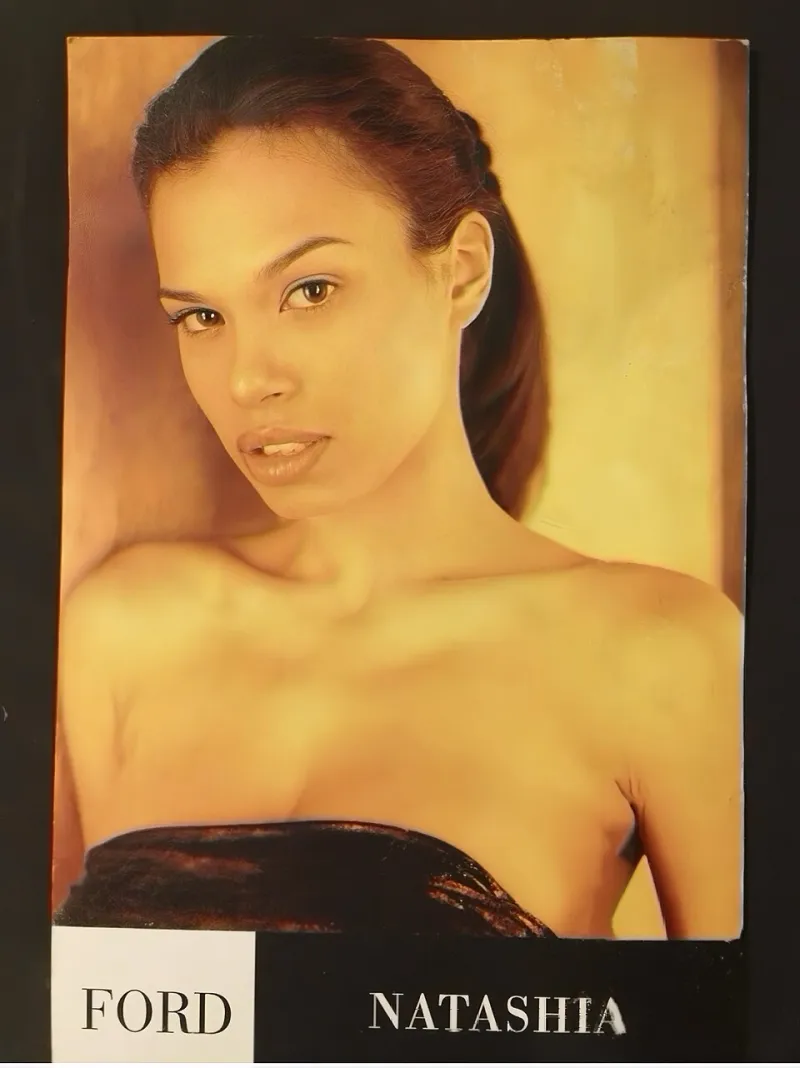
For decades, the path to a credible modeling portfolio followed a familiar script: sign with an agency, wait for the agency to schedule a test shoot, and hope the resulting images were strong enough to attract paying clients. That arrangement placed considerable control in the hands of representation—and left emerging talent in a prolonged holding pattern that could stretch from weeks into years.
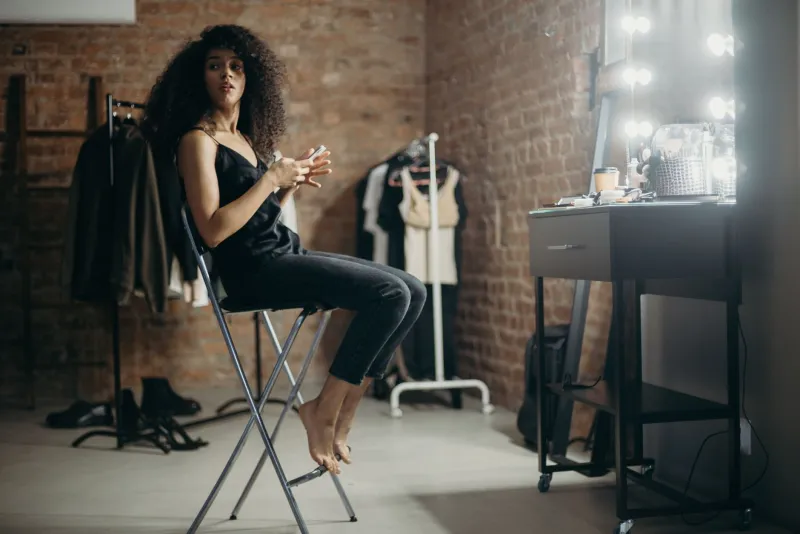
Today, a measurable segment of the industry is rewriting that script. Across the United States, models at every stage of their careers are converting spare bedrooms, basement corners, and apartment living rooms into functional home studios capable of producing content that competes with professionally commissioned work. The shift is not simply about saving money. It is about agency—in the most literal sense of the word.
The Economics of Waiting vs. the Economics of Investing
The traditional model of agency-sponsored photography carries a hidden cost that rarely appears on any invoice: time. A model waiting for representation to arrange a test shoot is a model whose portfolio is stagnant, whose digital presence is thin, and whose ability to respond quickly to casting opportunities is constrained.
Contrast that with the upfront investment required for a functional home studio. A mid-range mirrorless camera body, a standard prime lens, two continuous LED panel lights, a collapsible backdrop stand, and a remote shutter trigger can be assembled for roughly $800 to $1,500—a figure that, when spread across the volume of content a working model can produce, represents exceptional value per image. Many professionals in the field report recovering that investment within the first two or three self-generated bookings that their new portfolio assets helped secure.
The calculation shifts further when models factor in the subscription-based editing tools now available at accessible price points. Applications such as Adobe Lightroom and Capture One offer mobile-compatible workflows that allow talent to move from shoot to finished image within hours rather than days.
Lighting as the Decisive Variable
If there is a single technical factor that separates home studio content that reads as professional from content that does not, it is lighting. Experienced models who have successfully built home setups consistently identify light control as the area that rewards the most focused learning.
Soft, diffused light—achieved through affordable softboxes or even a large window treated with sheer white fabric—produces the even skin tones and dimensional shadows that editorial and commercial clients expect. The ring light, while ubiquitous on social platforms, tends to read as consumer-grade in a professional portfolio context and is generally best reserved for behind-the-scenes or social content rather than primary portfolio images.
A practical approach embraced by many home studio practitioners involves what is sometimes called a two-light setup: one key light positioned at roughly a 45-degree angle to the subject and one fill light or reflector on the opposite side to soften harsh shadows. This configuration is forgiving to learn, adaptable across a wide range of looks, and consistent enough to produce a cohesive visual identity across multiple images—something clients and casting directors actively look for when reviewing a book.
The Art of Directing Yourself
Self-direction is perhaps the least discussed and most underestimated skill in the home studio toolkit. Posing in front of a camera without a photographer or director present requires a model to simultaneously inhabit the subject and evaluate the frame—a genuinely demanding cognitive task.
Models who have refined this capability typically rely on a combination of tools and habits. A camera set to continuous shooting mode, triggered remotely via a wireless shutter release or a paired smartphone application, removes the mechanical interruption of pressing a shutter button and allows for more fluid, natural movement between frames. Reviewing images on a tethered laptop or tablet in real time—rather than checking the small camera screen after each burst—accelerates the feedback loop considerably.
Beyond equipment, self-direction requires the development of an internal editorial eye. Successful practitioners describe studying the work of photographers and art directors whose aesthetic aligns with the market they are targeting, then using that visual vocabulary to guide their own choices in front of the lens. Mood boards, reference images pinned to a nearby wall, and even short video clips reviewed immediately before a shooting session can all serve as anchors that keep the work focused and intentional.
From Portfolio Asset to Negotiating Tool
The implications of a self-sustaining content practice extend well beyond aesthetics. Models who produce their own portfolio imagery enter client and agency conversations with a fundamentally different kind of leverage.
When a model can demonstrate not only that she or he photographs compellingly but also that she or he can generate that content independently, on a consistent schedule, and at a professional standard, the conversation with a prospective client shifts. The model is no longer presenting as talent awaiting direction. She or he is presenting as a creative collaborator capable of contributing to a production in ways that extend beyond the frame.
For agencies evaluating emerging talent, a self-produced portfolio that demonstrates range, technical awareness, and consistency signals something valuable: a model who is invested enough in her or his own career to develop skills beyond posing. In a competitive market, that signal carries weight.
Some models have taken this logic a step further, licensing their self-produced content directly to brands through stock photography platforms or direct outreach—creating a revenue stream that exists entirely outside the traditional agency-mediated booking structure. While this path requires additional business acumen and an understanding of usage rights, it illustrates the degree to which the home studio can function as a genuine creative enterprise rather than merely a stopgap.
What Agencies Are Noticing
It would be inaccurate to suggest that the industry has responded to the home studio movement with uniform enthusiasm. Some agencies and casting directors maintain a preference for images produced in professional studio environments with credited photographers—a position grounded in the belief that the collaborative dynamic between model and photographer produces qualities that self-directed work cannot fully replicate.
That perspective, however, is increasingly moderated by the practical reality of what strong self-produced work looks like in 2024. When the technical execution is sound and the editorial sensibility is evident, the origin of the images becomes a secondary concern. What matters, ultimately, is whether the content communicates the model's range, professionalism, and commercial appeal.
Agencies that work closely with emerging talent report that the strongest home studio portfolios are those that are curated with the same discipline applied to any professional book—edited ruthlessly, organized with intention, and updated regularly to reflect the model's current look and market positioning.
The Shift in How Talent Is Defined
The home studio movement is, at its core, a conversation about what it means to be a professional model in the contemporary industry. The traditional definition—a person who shows up, takes direction, and photographs well—remains relevant. But it is no longer sufficient on its own as a measure of career viability.
Models who invest in the capacity to produce, direct, and distribute their own visual content are expanding the definition of their professional identity. They are not simply talent. They are creative professionals with a demonstrable stake in the quality and consistency of their own representation.
At FunCity Model, we recognize that the spotlight does not always wait for the perfect conditions. Sometimes, the most strategic move a model can make is to build the stage herself—and turn on the lights.