What the Room Is Telling You: Decoding Casting Director Behavior When No One Says a Word
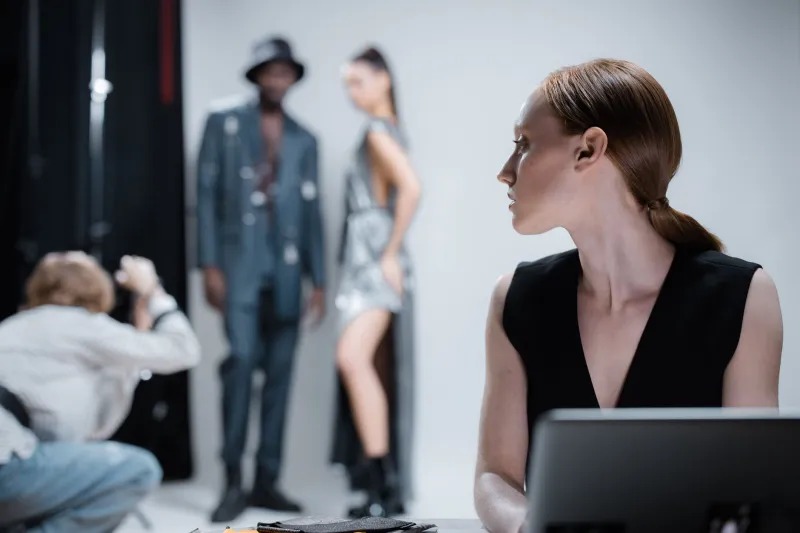
There is a particular kind of silence that fills an audition room — not the comfortable quiet of concentration, but the weighted, interpretive stillness that follows a model's first walk across the floor. Casting directors are trained professionals who evaluate dozens, sometimes hundreds, of individuals in a single day. They have developed the practiced ability to reveal very little on the surface. And yet, for the model who knows where to look, they reveal quite a lot.
The ability to read a room without relying on verbal confirmation is not a mystical skill. It is an observational discipline — one that the most strategically minded talent in the industry have quietly cultivated over years of auditions. At FunCity Model, we believe that understanding the unspoken dynamics of casting is as essential to career development as perfecting your walk or maintaining your book. What follows is a practical framework for decoding what casting directors communicate when they choose not to say anything at all.
The Baseline: Establishing What Neutral Looks Like
Before a model can identify a signal of genuine interest, she or he must first understand what genuine neutrality looks like in the room. Most experienced casting directors maintain a deliberate baseline — a composed, non-reactive expression designed to prevent talent from becoming distracted by perceived approval or disapproval mid-audition.
This baseline typically includes relaxed shoulders, a slight forward lean over paperwork, and minimal eye contact during the initial entry. Understanding this as a professional default — rather than as indifference — prevents the common mistake of over-reading neutral behavior as rejection. The baseline is not a verdict. It is simply the starting point from which meaningful deviations become visible.
Micro-Expressions and What They Signal
The human face is extraordinarily difficult to control at the micro-expression level. A casting director who experiences a genuine moment of visual interest will often display it involuntarily — a fractional raise of the eyebrows, a slight parting of the lips, or a momentary cessation of note-taking. These are not dramatic responses. They last fractions of a second. But they are consistent, and they are meaningful.
Conversely, the tight press of lips, a slight downward redirect of the gaze, or a return to writing before a model has completed a pass are all behavioral patterns worth noting. None of these signals should be interpreted as definitive rejection, but they do suggest that the casting director has not yet found a compelling reason to pause and pay closer attention.
The important discipline here is restraint. A model who adjusts their performance mid-room in response to perceived micro-expressions risks appearing reactive rather than confident. The value of reading these signals lies in the information they provide afterward — in the debrief you conduct with yourself once the audition is complete.
The Weight of Redirected Attention
One of the most telling behavioral patterns in a casting environment involves the direction of attention after a model completes a requested action. When a casting director immediately whispers to a colleague, leans forward, or marks something with a visible notation, that is a qualitatively different response than the one that involves simply moving to the next page of a portfolio or calling the next name.
In group auditions — common in commercial castings and runway calls across major US markets including New York, Los Angeles, and Miami — watch for the moment when a casting director's eyes follow a model who has already stepped aside. Sustained attention after the formal portion of an evaluation is one of the clearest non-verbal indicators of continued consideration.
Equally instructive is the quality of a dismissal. A casting director who ends an audition with a clipped "thank you" while already redirecting attention elsewhere is communicating something categorically different from one who offers the same words while maintaining eye contact and a brief, genuine pause. The phrasing may be identical. The meaning rarely is.
Body Language as Institutional Communication
It is worth recognizing that casting directors do not operate in isolation. The behavioral signals in a room are often collective — and reading the ensemble dynamic can be as informative as reading any individual.
When multiple people behind the table shift their posture simultaneously upon a model's entry, that synchronized physical response is not accidental. When a panel that has been quietly conversing falls into attentive silence the moment a particular talent begins to move, that silence carries weight. These collective responses are among the strongest non-verbal endorsements a model can receive in a professional audition setting.
The reverse is also true. A panel that continues its murmured side conversations, that never quite achieves the synchronized attention described above, is communicating through that very lack of cohesion. The talent has not yet compelled the room to unify its focus.
Practical Application: The Post-Audition Debrief
The real competitive advantage of developing observational skill lies not in adjusting your behavior mid-audition, but in the quality of reflection you engage in afterward. Models who build a consistent practice of noting behavioral patterns — ideally through brief written observations recorded as soon as possible after each casting — develop an increasingly refined sense of what genuine interest looks like across different casting environments and client types.
Over time, this practice yields something invaluable: a personal data set that reveals patterns specific to your market and your look. You may begin to notice that a particular type of client consistently responds to a specific quality in your presentation, or that certain rooms tend to signal engagement through means you had previously overlooked.
This is not guesswork. It is the systematic conversion of qualitative observation into career intelligence.
The Discipline of Not Performing the Read
Perhaps the most important caution in this entire framework is this: the moment a casting director senses that a model is reading the room rather than inhabiting it, the dynamic shifts in a way that rarely works in the talent's favor. Observational skill must be developed in a way that never becomes visible during the audition itself.
The goal is not to become a student of casting director psychology at the expense of presence. It is to become the kind of professional whose awareness is so deeply internalized that it informs performance without interrupting it — the model who walks into a room fully committed to the moment, and walks out with a clear, honest assessment of what just happened.
In an industry where verbal feedback is scarce and rejection rarely comes with explanation, that clarity is not a small thing. It is, for many working professionals, the difference between a career that stalls and one that steadily advances.