The Zip Code Myth: Why Where You Live Has Almost Nothing to Do With Who You Meet
For a long time, the geography of fashion felt like a locked door. New York held the key. Los Angeles held a copy. Miami kept one under the mat. If your mailing address was anywhere else—Columbus, Memphis, Albuquerque, Portland—the unspoken assumption was that you were standing on the wrong side of that door, waiting for permission to enter.
That assumption is no longer accurate. And the models who understand this earliest are the ones reshaping what a working career actually looks like in 2025.
The Old Map No Longer Applies
The traditional modeling pipeline was built around physical proximity. Agencies clustered in major markets. Casting directors held calls in those same cities. Editorial clients, brand representatives, and production houses all operated within a tight geographic radius. To be seen, you had to be present. To be present, you had to be local.
What disrupted that model was not a single technology or trend—it was a gradual accumulation of tools and behaviors that made distance irrelevant to relationship-building. Remote casting became normalized across commercial, editorial, and digital campaigns. Industry professionals began hosting workshops, panels, and portfolio reviews online. Photographers in secondary markets started attracting national attention through their own digital platforms. The infrastructure of access shifted, and it shifted in a direction that favors the prepared over the proximate.
This does not mean that New York Fashion Week has moved to Nashville. What it means is that the relationships that lead to those rooms can now be built from Nashville—if you know how to build them.
Relationships Are Not the Same as Followers
One of the most persistent misunderstandings among emerging talent is conflating social media visibility with professional connectivity. A large following suggests cultural relevance, but it does not, on its own, open booking conversations. Casting directors and agency representatives are not scrolling through Instagram looking for their next discovery in the same way that a brand might scout for an influencer partnership.
Strategic networking operates differently. It is deliberate, specific, and oriented toward value exchange rather than visibility accumulation. It asks: who are the decision-makers in the markets I want to enter, and what is the most credible way to enter their professional orbit?
For talent based outside major hubs, this requires a different kind of research. Identify photographers whose commercial work aligns with the clients you want to attract. Study the casting directors who serve regional markets—because every major city has surrounding markets that pull talent from a wide radius. Look at which agencies regularly send scouts to trade shows, modeling conventions, and regional competitions. These are not secondary pathways. For many working models, they are the primary ones.
The Strategic Value of Industry Events
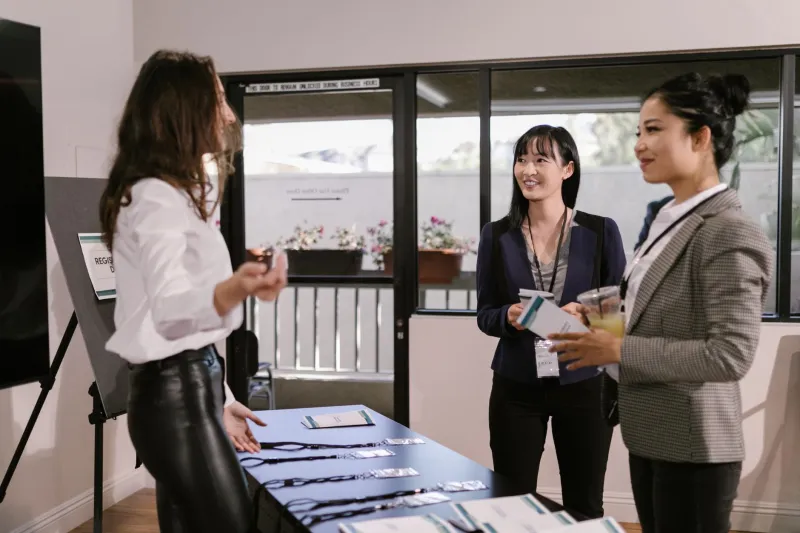
National modeling conventions and industry showcases remain among the most underutilized tools available to talent in smaller markets. Events such as IMTA, PageantPlanet-affiliated competitions, and regional agency open calls bring decision-makers to a centralized location precisely because they are looking for talent that has not yet entered the major-market pipeline.
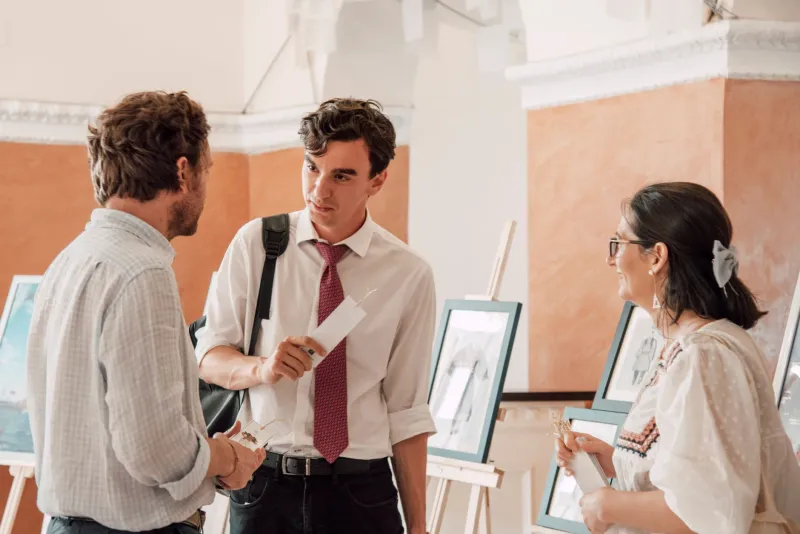
Attending these events as a passive participant is a missed opportunity. Arriving with a clear objective—two or three specific professionals you want to meet, a portfolio that speaks directly to the work they produce, and a follow-up plan that begins within 48 hours of the event—transforms attendance into traction.
The follow-up is where most emerging talent loses momentum. A brief, professional message referencing a specific conversation or shared observation demonstrates that you were present and attentive, not simply circulating. That distinction matters more than most models realize.
Digital Presence as a Positioning Tool, Not a Performance Stage
Your online presence should be doing one thing above all others: communicating your professional positioning to the people who make booking decisions. This is not the same as performing for a general audience.
A curated, intentional digital portfolio—whether hosted on a personal website, a modeling platform, or a well-maintained social profile—should answer the questions a casting director or agency representative would ask before reaching out. What is your range? What markets do you serve? What is the quality of your existing work? Who have you collaborated with?
Models in secondary markets often underestimate how much a strong digital presence can compress geographic distance. A casting director in Chicago or Atlanta who discovers a model in Boise through a well-executed portfolio and a credible body of work is not deterred by the distance—they are asking whether the model is worth the conversation. Your job is to make that answer obvious before they have to ask.
Building the Room From Outside It
There is a phrase that circulates in professional development circles: you do not get into rooms by waiting to be invited—you build the conditions that make the invitation inevitable. For talent outside traditional modeling hubs, this is not a motivational abstraction. It is a practical framework.
Building those conditions means consistent collaboration with local photographers who have regional or national reputations. It means developing a specialty—commercial lifestyle, fitness, plus-size editorial, brand ambassador work—that gives decision-makers a clear reason to seek you out rather than a generic reason to consider you. It means being visible in the professional spaces where your target market gathers, even when those spaces are virtual.
It also means being honest about the timeline. Relationship-based networking is slower than a viral moment and more durable than a trending post. The models who treat it as a long-term investment rather than an immediate transaction are the ones who find themselves in rooms they never had to relocate to enter.
What Location Still Matters For
None of this suggests that geography is entirely irrelevant. There are categories of work—runway, certain editorial shoots, high-volume commercial production—where physical presence in a major market remains a practical requirement. For talent pursuing those specific opportunities, temporary relocation or frequent travel may be part of the equation.
But the decision to relocate should follow demonstrated demand, not precede it. Models who build meaningful industry relationships from their current location arrive in major markets with a foundation already in place—contacts, credits, and a reputation that precedes them. That is a fundamentally different position than arriving as an unknown hoping proximity will substitute for preparation.
The Competitive Advantage of the Prepared Outsider
There is, counterintuitively, a quiet advantage available to talent who have built careers outside the saturated major markets. Decision-makers who encounter a model with a strong book, clear positioning, and a professional network that extends into their own circles—despite operating from a secondary market—tend to take that seriously. It signals resourcefulness. It signals that the talent is not waiting for the industry to come to them.
At FunCity Model, we work with professionals who understand that the spotlight does not have a fixed address. The geography of gatekeeping has changed. The models who recognize that earliest are not just keeping up—they are setting the pace.