Beyond the Runway: Career Transitions Redefining What It Means to Be a Professional Model
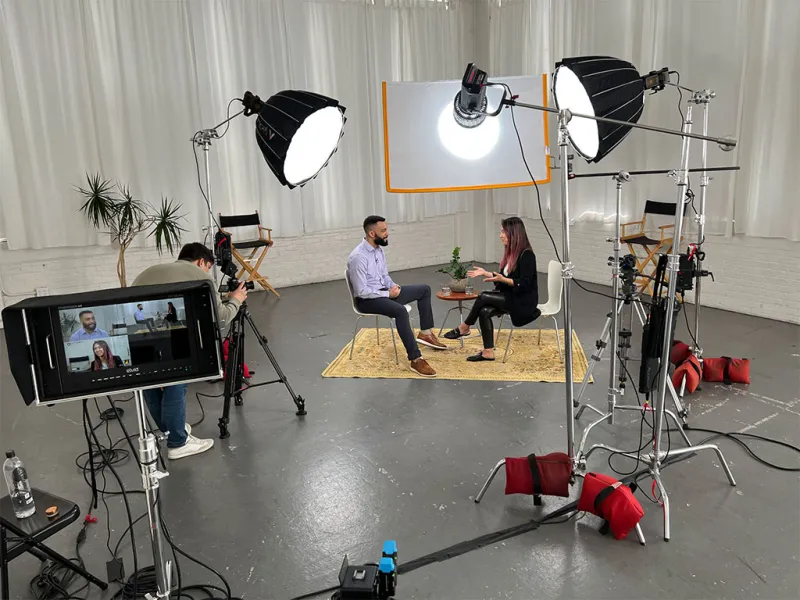
Photo: professional model transitioning to television hosting interview set, via alancashvideo.com
The image of a model as a silent, statuesque presence has never fully captured the reality of the profession. Modeling demands discipline, adaptability, emotional intelligence, and the ability to perform under pressure — qualities that translate directly into a wide range of careers. What is new is not the transferability of these skills, but the frequency and visibility with which models are now acting on them.
Across the United States, talent agents and industry insiders are documenting a clear pattern: professional models are pivoting into hosting, acting, entrepreneurship, and content creation at a rate not seen in previous generations. Understanding why — and how — illuminates something important about both the evolving entertainment landscape and the nature of modeling itself.
Why Now? The Forces Accelerating Career Pivots
Several converging factors have made this moment particularly fertile for career transitions. The fragmentation of media has created demand for on-camera talent across an unprecedented number of formats — streaming platforms, branded content, podcasting, live commerce, and reality television all require hosts and personalities who are comfortable in front of a camera and capable of engaging an audience authentically.
Simultaneously, the modeling industry itself has grown more competitive and, in some respects, more compressed. Digital platforms have expanded the pool of individuals presenting themselves as models, while brand budgets have increasingly shifted toward performance-driven digital campaigns. For seasoned professionals seeking longevity, diversification is not merely attractive — it is strategic.
There is also a generational dimension. Models entering the industry today tend to approach their careers with a portfolio mindset from the outset, viewing modeling as one component of a broader creative and entrepreneurial identity rather than an endpoint in itself.
The Transferable Skill Set Models Often Underestimate
Agents and casting directors who work across entertainment disciplines consistently note that models arrive at auditions and pitch meetings with advantages they frequently fail to recognize.
Camera confidence is perhaps the most obvious. Years of navigating lenses, lighting, and directorial instruction produce a level of physical ease on camera that actors and hosts often spend years developing through formal training. Models know how to take direction, adjust in real time, and maintain composure under the scrutiny of a production crew.
Presentation and communication skills are equally undervalued. Showroom work, client meetings, and runway presentations require models to represent both themselves and a brand with poise and clarity. These are precisely the competencies that translate into hosting roles, spokesperson positions, and business development contexts.
Resilience and professionalism round out the profile. The modeling industry is one of the most rejection-intensive professions in existence. Models who build sustainable careers do so by developing a psychological durability and a capacity for self-directed growth that serves them well in any competitive field.
Pathways Into Adjacent Roles
The transitions models are making are not uniform. Different backgrounds and interests lend themselves to different directions.
Television hosting and reality programming represent one of the most direct crossovers. Reality formats — competition shows, lifestyle programming, travel content — actively seek hosts who possess physical presence and on-camera ease. Several prominent American models have transitioned into hosting roles on major networks and streaming platforms, using their industry credibility as an entry point and their camera skills as the foundation.
Acting requires more deliberate preparation. Models pursuing this path typically invest in formal training — scene study classes, improv workshops, and work with acting coaches who specialize in screen performance. The transition demands a willingness to be vulnerable in ways that modeling does not always require, and the timeline for establishing oneself as a working actor is rarely short. That said, the visual literacy and physical awareness models bring to acting training accelerates certain aspects of development.
Entrepreneurship has become one of the most common and commercially successful pivot directions. Models who have spent years working closely with brands develop an acute understanding of marketing, consumer psychology, and product presentation. Several models have leveraged this knowledge to launch beauty lines, fashion labels, wellness brands, and lifestyle companies. The audience and credibility built through modeling provides a meaningful head start that traditional entrepreneurs rarely enjoy.
Content creation and media represent perhaps the most accessible transition. Models who have cultivated digital audiences are, in many respects, already operating as media personalities. The formalization of this role — through podcasting, YouTube channels, or newsletter-based businesses — is a natural extension of existing activity.
Preparing for the Transition: What Industry Insiders Advise
Agents who have guided models through successful career pivots share consistent counsel. The most important step, they emphasize, is to begin preparation before the transition feels urgent. Models who start developing adjacent skills while their modeling careers are still active arrive at pivots from a position of strength rather than necessity.
Building a personal brand — a coherent narrative identity that extends beyond physical appearance — is frequently cited as the single most valuable investment a model can make in their long-term career. It creates continuity across transitions and ensures that audiences and industry contacts can follow a professional's evolution without confusion.
Networking across disciplines, rather than exclusively within the modeling world, expands the web of relationships from which opportunities emerge. Attending industry events, participating in panel discussions, and engaging with professionals in adjacent fields all contribute to a broader professional ecosystem.
Finally, embracing formal education or training in target areas signals seriousness and builds genuine competency. The models who make the most credible transitions are those who have done the preparation work — not those who assume their existing platform will carry them automatically.
A Career Architecture Built for the Long Term
At FunCity Model, we believe that talent is not confined to a single expression. The models and creative professionals we champion are multidimensional individuals whose capabilities extend far beyond any single booking or campaign. The career pivot is not a departure from the modeling profession — it is an evolution of it.
The spotlight is wide enough to accommodate every dimension of a model's talent. The professionals who are thriving today are those who have recognized that truth and built their careers accordingly.